

Budgeting 101: How Young Professionals Can Manage Their Money Effectively
Managing finances as a young professional can feel overwhelming. From paying rent and student loans to planning for future goals, it’s easy to lose track of your money. Budgeting is the first step toward financial control and freedom.
At Dhingra Wealth, we help young professionals create realistic budgets that balance lifestyle, savings, and investments.
Why Budgeting Matters
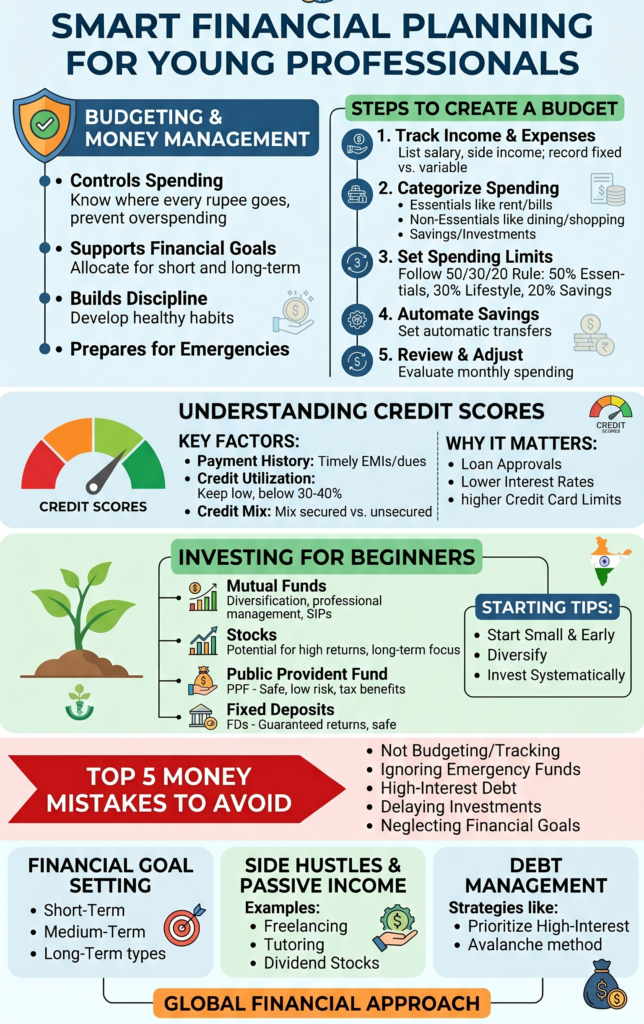
- Controls Spending – Know where every rupee goes and prevent overspending.
- Supports Financial Goals – Allocate money for short-term and long-term objectives.
- Builds Discipline – Regular budgeting develops healthy money habits.
- Prepares for Emergencies – Ensures funds are available for unexpected expenses.
Steps to Create an Effective Budget
- Track Your Income and Expenses
- List monthly income, including salary, freelance work, or side income.
- Record fixed expenses (rent, utilities) and variable expenses (food, entertainment).
- Categorize Spending
- Essentials: Rent, groceries, bills
- Non-Essentials: Dining out, entertainment, shopping
Savings/Investments: SIPs, emergency fund, retirement contribution
- Set Spending Limits
- Follow the 50/30/20 rule: 50% essentials, 30% lifestyle, 20% savings/investments
- Adjust percentages based on personal goals and income
- Automate Savings
- Set up automatic transfers to savings accounts or investment accounts
- Prioritize saving before discretionary spending
- Review and Adjust Regularly
- Evaluate monthly spending and tweak the budget as needed
- Track progress toward financial goals
Dhingra Wealth’s Approach
We help young professionals:
- Build personalized budgets aligned with income and goals
- Integrate saving and investing into everyday spending
- Monitor and adjust budgets to maximize financial efficiency
- Educate clients on tools and apps for easy budgeting
Conclusion
Budgeting is the foundation of financial success. Start early, track diligently, and stay disciplined. With proper budgeting, you can enjoy your lifestyle while steadily building wealth for the future.
👉 Partner with Dhingra Wealth to create a budgeting plan that puts your finances on the right track.
Understanding Credit Scores and How They Affect Your Financial Life
Your credit score is more than just a number—it’s a critical factor that influences your ability to borrow, the interest rates you pay, and even your financial credibility. Understanding and maintaining a healthy credit score is essential for young professionals.
At Dhingra Wealth, we guide clients to monitor, improve, and leverage their credit scores to make smarter financial decisions.
What is a Credit Score?
A credit score is a three-digit number that reflects your creditworthiness. In India, credit bureaus like CIBIL, Experian, and Equifax calculate scores based on your financial behavior.
Key Factors Affecting Credit Scores:
- Payment History – Timely repayment of EMIs, credit cards, and loans
- Credit Utilization Ratio – How much of your available credit you are using
- Length of Credit History – Longer credit history can positively influence scores
- Types of Credit – A healthy mix of secured (home loan) and unsecured loans (personal loan, credit card)
- Recent Credit Inquiries – Frequent loan applications can lower your score
Why Credit Scores Matter
- Loan Approvals – Banks and NBFCs check your score before approving loans.
- Interest Rates – Higher scores can qualify you for lower interest rates.
- Credit Card Limits – Healthy scores can unlock higher credit limits.
- Rental Agreements & Employment – Some landlords and employers review credit scores.
- Financial Discipline – A good score reflects responsible financial behavior.
How to Improve and Maintain Your Credit Score
- Pay Bills On Time
- Always pay EMIs, credit card bills, and other dues on time
- Even a single missed payment can impact your score significantly
- Keep Credit Utilization Low
- Maintain usage below 30–40% of your credit limit
- Avoid maxing out credit cards
- Avoid Multiple Loan Applications
- Limit new loan or credit card applications
- Frequent checks by lenders can reduce your score
- Maintain a Healthy Credit Mix
- Combine secured loans (like home loans) and unsecured credit (credit cards) responsibly
- Demonstrates financial maturity to lenders
- Regularly Monitor Your Credit Report
- Check for errors or discrepancies and get them corrected promptly
- Annual credit report checks are recommended
Dhingra Wealth’s Approach
We help young professionals:
- Understand and monitor their credit scores regularly
- Implement strategies to improve and maintain healthy scores
- Integrate credit behavior into overall financial planning
- Educate clients on the impact of borrowing decisions on long-term goals
Conclusion
A good credit score is a powerful tool for financial independence. By paying bills on time, maintaining low credit utilization, and monitoring your score, you can unlock better loans, favorable interest rates, and greater financial opportunities.
👉 Partner with Dhingra Wealth to optimize your credit score and strengthen your financial foundation.
Top 5 Mistakes Young Professionals Make With Money
Starting your career is exciting, but financial missteps early on can have long-term consequences. Recognizing and avoiding common mistakes can help young professionals build wealth, stay debt-free, and secure their financial future.
At Dhingra Wealth, we guide clients to develop strong financial habits and make informed money decisions from the start.
Mistake 1: Not Budgeting or Tracking Expenses
- Many young professionals spend without a clear plan.
- Impact: Overspending, missed savings goals, and financial stress.
- Solution: Create a budget, track monthly expenses, and allocate funds for savings and investments.
Mistake 2: Ignoring Emergency Funds
- Emergencies like medical bills or sudden unemployment can derail finances.
- Impact: High-interest borrowing or dipping into investments.
- Solution: Maintain an emergency fund covering 6–12 months of expenses in liquid assets.
Mistake 3: Accumulating High-Interest Debt
- Credit cards, personal loans, and payday loans can grow quickly if mismanaged.
- Impact: High interest reduces your ability to save or invest.
- Solution: Pay off high-interest debt first, avoid unnecessary borrowing, and track credit utilization.
Mistake 4: Delaying Investments
- Postponing investing due to “low income” or “uncertainty” is common.
- Impact: Missed opportunity for long-term wealth and compounding benefits.
- Solution: Start small SIPs or mutual fund investments early; even modest contributions grow over time.
Mistake 5: Neglecting Financial Goals and Planning
- Many young professionals spend without defining short-term and long-term goals.
- Impact: Lack of direction, inefficient savings, and missed opportunities.
- Solution: Set clear financial goals—buying a house, building retirement corpus, travel, or emergency funds—and align budgeting and investments accordingly.
Dhingra Wealth’s Approach
We help young professionals:
- Identify financial mistakes early and implement corrective actions
- Create goal-oriented financial plans for short-term and long-term objectives
- Balance budgeting, debt management, and investments for sustainable wealth growth
- Educate clients on financial discipline and smart money habits
Conclusion
Avoiding common money mistakes early can set the foundation for financial independence and security. With careful planning, disciplined spending, and smart investing, young professionals can achieve their financial goals faster.
👉 Partner with Dhingra Wealth to develop a tailored financial strategy and build a secure, prosperous future.
Investing for Beginners: Mutual Funds, Stocks, and Other Options
Starting your investment journey as a young professional is one of the smartest financial decisions you can make. Early investing maximizes the power of compounding, helping you achieve both short-term and long-term financial goals.
At Dhingra Wealth, we guide beginners to understand investment options, risks, and strategies to grow wealth safely and efficiently.
Why Young Professionals Should Start Investing Early
- Power of Compounding – Even small amounts grow significantly over time.
- Time to Recover from Market Fluctuations – Longer horizons reduce risk from short-term volatility.
- Builds Financial Discipline – Regular investing develops consistent saving habits.
- Achieve Financial Goals Faster – Education, buying a house, travel, and retirement.
Popular Investment Options for Beginners
- Mutual Funds
- Pooled investment managed by professionals.
- Types include: Equity, Debt, Hybrid, and ELSS (tax-saving).
- Benefits: Diversification, professional management, and easy SIP options.
- Stocks
- Ownership in individual companies.
- Potential for high returns but higher risk.
- Best suited for long-term investors who can handle market volatility.
- Public Provident Fund (PPF)
- Government-backed, long-term savings option.
- Tax-free returns, low risk, and compounding benefits.
- Fixed Deposits (FDs) and Recurring Deposits (RDs)
- Safe, guaranteed returns.
- Ideal for short-term goals and emergency savings.
- National Pension Scheme (NPS)
- Long-term retirement-focused investment.
- Tax benefits and market-linked growth potential.
- Gold & Other Alternatives
- Physical gold, sovereign gold bonds, and ETFs.
- Hedge against inflation and diversify portfolio.
Tips for Beginner Investors
- Start Small, Start Early – Even ₹1,000/month can grow significantly with time.
- Diversify Your Portfolio – Spread investments across asset classes to reduce risk.
- Invest Systematically – Use SIPs to maintain discipline and benefit from rupee cost averaging.
- Set Clear Goals – Align investments with short-term, medium-term, and long-term goals.
- Avoid Emotional Decisions – Stay invested through market ups and downs.
Dhingra Wealth’s Approach
We help young professionals:
- Choose the right investment mix based on risk appetite and goals
- Create personalized SIP plans to maximize long-term returns
- Monitor and rebalance portfolios for optimal growth
- Provide guidance to avoid common investment mistakes
Conclusion
Investing early sets the foundation for financial security and wealth creation. With a disciplined approach, diversified portfolio, and professional guidance, young professionals can grow wealth efficiently and achieve their financial dreams.
👉 Partner with Dhingra Wealth to start your investment journey with confidence.
Financial Goal Setting: How to Plan for Short-Term and Long-Term Goals
Setting financial goals is crucial for young professionals. Without clear goals, even disciplined saving and investing may not lead to financial success. Goal setting provides direction, purpose, and motivation to manage money effectively.
At Dhingra Wealth, we help clients define realistic goals and create actionable plans to achieve them.
Why Financial Goal Setting Matters
- Provides Clarity – Understand exactly what you want to achieve financially.
- Prioritizes Spending and Saving – Helps allocate resources efficiently.
- Motivates Consistent Action – Encourages regular saving and investing.
- Prepares for Emergencies – Aligns short-term liquidity needs with long-term objectives.
- Measures Progress – Allows regular review and adjustments to stay on track.
Types of Financial Goals
- Short-Term Goals (0–3 years)
- Examples: Emergency fund, vacation, buying gadgets, or paying off credit card debt
- Focus on safe, liquid investments like savings accounts, liquid funds, or recurring deposits
- Medium-Term Goals (3–7 years)
- Examples: Down payment for a house, higher education, car purchase
- Balanced investments: debt and equity mutual funds, PPF, or combination portfolios
- Long-Term Goals (7+ years)
- Examples: Retirement corpus, wealth accumulation, financial independence
- Higher equity exposure with SIPs in mutual funds or direct stocks for growth potential
Steps to Set Financial Goals
- Identify and List Your Goals
- Separate them by short-term, medium-term, and long-term
- Prioritize based on urgency and importance
- Estimate Costs
- Consider inflation and rising costs
- Use realistic estimates for each goal
- Determine a Timeframe
- Set a clear deadline for achieving each goal
- Choose Investment Options
- Align investment type with goal horizon and risk tolerance
- Use a mix of equity, debt, and tax-saving instruments
- Monitor and Adjust Regularly
- Review goals periodically
- Adjust contributions or investments if needed
Dhingra Wealth’s Approach
We help young professionals:
- Define personalized financial goals with timelines and costs
- Design investment plans to meet short-term and long-term objectives
- Track progress and adjust strategies for inflation and life changes
- Ensure goal-oriented wealth creation without compromising lifestyle
Conclusion
Financial goal setting is the foundation of smart money management. By identifying priorities, estimating costs, and investing strategically, young professionals can achieve their dreams while building long-term financial security.
👉 Partner with Dhingra Wealth to set meaningful financial goals and create a roadmap to achieve them.
Side Hustles and Passive Income: Boosting Your Wealth Early
Relying solely on a salary may limit your financial growth, especially in your 20s and 30s. Side hustles and passive income streams can accelerate wealth creation, reduce dependency on a single income, and help achieve financial goals faster.
At Dhingra Wealth, we guide young professionals to identify opportunities and structure multiple income streams safely and effectively.
Why Side Hustles and Passive Income Matter
- Accelerates Wealth Building – Extra income can be invested for compounding growth.
- Diversifies Income Sources – Reduces risk of relying solely on your job.
- Supports Financial Goals – Enables faster achievement of short-term and long-term objectives.
- Encourages Skill Development – Many side hustles improve professional expertise.
- Provides Financial Security – Additional streams can act as a safety net during emergencies.
Popular Side Hustles for Young Professionals
- Freelancing – Writing, graphic design, coding, marketing, or consulting.
- Tutoring or Online Courses – Teaching a skill or subject you excel in.
- Content Creation – YouTube, blogging, or social media management.
- E-commerce and Reselling – Selling products on platforms like Amazon, Etsy, or Shopify.
- Gig Economy Jobs – Ride-sharing, food delivery, or on-demand services.
Passive Income Opportunities
- Dividend-Paying Stocks – Invest in shares that provide regular dividends.
- Mutual Funds and SIPs – Long-term wealth creation through equity or hybrid funds.
- Rental Income – Leasing property for steady monthly income.
- Digital Products – Selling eBooks, templates, or software with recurring sales.
- Interest from Fixed Deposits and Bonds – Safe, predictable returns.
Tips to Manage Side Hustles and Passive Income
- Balance with Primary Job – Ensure side work doesn’t impact your main career.
- Track Income and Taxes – Record earnings and plan for tax implications.
- Invest Wisely – Channel extra income into growth-oriented investments.
- Focus on Scalable Opportunities – Choose options with potential for long-term returns.
- Maintain Consistency – Regular effort compounds over time, just like investments.
Dhingra Wealth’s Approach
We help young professionals:
- Identify side hustles and passive income opportunities aligned with skills and lifestyle
- Optimize tax efficiency for additional income streams
- Allocate extra earnings into goal-oriented investments
- Provide guidance to maintain financial balance and stability
Conclusion
Side hustles and passive income streams are powerful tools for young professionals to accelerate wealth creation, achieve financial independence early, and secure their future.
👉 Partner with Dhingra Wealth to explore income opportunities and integrate them into a smart financial plan.
Smart Spending: How to Avoid Lifestyle Inflation
As your income grows, it’s tempting to upgrade your lifestyle immediately—new gadgets, expensive meals, and luxury experiences. This phenomenon, called lifestyle inflation, can prevent wealth accumulation if not managed wisely.
At Dhingra Wealth, we help young professionals balance lifestyle aspirations with financial discipline, ensuring growth in savings and investments alongside increased earnings.
What is Lifestyle Inflation?
Lifestyle inflation happens when spending increases proportionally with income, leaving little room for savings or investments. For example:
- Getting a promotion and immediately buying a more expensive car or apartment
- Upgrading daily habits, subscriptions, and social expenses
Why Avoid Lifestyle Inflation
- Preserves Wealth – Prevents income from being consumed entirely by new expenses.
- Supports Financial Goals – Ensures funds are available for investments, debt repayment, and emergencies.
- Builds Long-Term Security – Extra savings compound over time for retirement or major purchases.
- Reduces Stress – Less financial pressure and more control over money.
Tips to Spend Smart
- Budget According to Goals, Not Income
- Base your spending on financial goals rather than salary increments.
- Allocate extra income primarily to investments and savings.
- Prioritize Needs Over Wants
- Identify essential expenses and delay discretionary purchases.
- Use the 50/30/20 rule: 50% needs, 30% wants, 20% savings/investments.
- Automate Savings and Investments
- Automatically divert salary increments into SIPs, retirement accounts, or emergency funds.
- Out of sight, out of mind helps prevent unnecessary spending.
- Set Lifestyle Limits
- Cap monthly spending for luxuries like dining, gadgets, or entertainment.
- Review spending periodically to ensure discipline.
- Invest in Experiences, Not Just Stuff
- Focus on experiences that create value, learning, or long-term happiness rather than material possessions.
Dhingra Wealth’s Approach
We help young professionals:
- Track spending and identify areas of unnecessary lifestyle inflation
- Create goal-based budgeting and investment plans
- Provide financial education to develop sustainable money habits
- Ensure salary growth translates into wealth creation rather than higher expenses
Conclusion
Avoiding lifestyle inflation is key to building long-term wealth. By spending consciously, automating investments, and prioritizing financial goals, young professionals can enjoy a comfortable lifestyle while securing their financial future.
👉 Partner with Dhingra Wealth to create a smart spending plan that balances lifestyle and wealth creation.
Digital Tools and Apps to Track Your Finances Efficiently
Managing personal finances can be overwhelming, especially for young professionals juggling multiple expenses, investments, and goals. Digital tools and apps simplify money management, helping you track spending, investments, and savings effortlessly.
At Dhingra Wealth, we guide clients to leverage technology for smarter financial decisions, making budgeting and goal tracking easier than ever.
Why Use Digital Finance Tools
- Real-Time Tracking – Monitor income, expenses, and investments instantly.
- Better Budgeting – Categorize spending and stay within limits.
- Goal Monitoring – Track progress toward short-term and long-term financial goals.
- Alerts and Reminders – Never miss bill payments, SIPs, or loan EMIs.
- Data-Driven Insights – Understand spending patterns and optimize financial decisions.
Popular Finance Apps and Tools
- Expense Tracking Apps
- Examples: Walnut, Money Manager, Monefy
- Features: Automatic expense categorization, budget limits, and spending reports
- Budgeting Apps
- Examples: Goodbudget, YNAB (You Need a Budget)
- Helps create monthly budgets and allocate money for needs, wants, and savings
- Investment Tracking Apps
- Examples: Groww, Zerodha Kite, Paytm Money
- Monitor mutual funds, stocks, ETFs, and portfolio performance
- Banking and Payment Apps
- Examples: Google Pay, PhonePe, Paytm
- Keep track of transactions, bill payments, and transfers in one place
- Financial Planning Tools
- Examples: ET Money, ClearTax, Scripbox
- Assist in tax planning, goal-based investing, and retirement projections
Tips for Using Digital Tools Effectively
- Automate Wherever Possible – Set up auto-SIPs, bill payments, and savings transfers.
- Review Weekly or Monthly – Regularly check dashboards to track spending and progress.
- Integrate Multiple Accounts – Consolidate all bank accounts, cards, and investments for a complete view.
- Stay Updated – Keep apps updated to benefit from the latest features and security updates.
- Use Insights for Action – Analyze patterns and adjust budgets or investments accordingly.
Dhingra Wealth’s Approach
We help young professionals:
- Select the right digital tools based on personal finance needs
- Integrate apps into goal-based financial planning
- Track and review portfolios, budgets, and tax strategies efficiently
- Educate clients to leverage technology for smarter money management
Conclusion
Digital finance tools empower young professionals to take control of their money, track expenses, and stay aligned with financial goals. By combining technology with smart planning, you can save more, invest wisely, and build wealth efficiently.
👉 Partner with Dhingra Wealth to make the most of digital tools and achieve your financial goals seamlessly.
Debt Management: How to Handle Student Loans and Credit Card Debt
Debt is a reality for many young professionals, whether it’s student loans, credit cards, or personal loans. While borrowing can help meet immediate needs, mismanaging debt can lead to financial stress and hinder wealth creation.
At Dhingra Wealth, we help young professionals manage debt efficiently, reduce interest costs, and maintain a healthy financial profile.
Why Debt Management is Crucial
- Protects Credit Score – Timely repayment ensures a strong credit history.
- Reduces Interest Costs – Strategic repayment minimizes unnecessary interest payments.
- Supports Financial Goals – Freeing up funds for investments and savings.
- Prevents Stress – Organized debt management avoids last-minute financial pressure.
Common Debt Challenges for Young Professionals
- High-Interest Credit Cards – Can accumulate quickly if balances are not paid in full
- Multiple Loans – Student loans, personal loans, and EMIs overlapping
- Lack of Repayment Plan – Paying minimum amounts or ignoring debt due dates
- Impulse Borrowing – Taking loans or credit cards without a clear purpose
Strategies to Manage Debt Effectively
- List All Debts and Interest Rates
- Make a complete list of loans, credit card balances, and interest rates
- Helps prioritize repayment strategy
- Prioritize High-Interest Debt
- Pay off credit cards and high-interest loans first
- Reduces overall interest burden
- Consider the Debt Avalanche or Snowball Method
- Avalanche: Pay debts with highest interest first
- Snowball: Pay smallest debts first for psychological motivation
- Automate Payments
- Set up auto-debits to avoid missed payments and penalties
- Ensures timely EMI and credit card settlements
- Limit New Borrowing
- Avoid unnecessary loans and credit card use until existing debts are under control
- Maintain a balanced credit utilization ratio
- Refinance or Consolidate Loans (If Needed)
- Combine multiple high-interest loans into a single lower-interest loan
- Reduces complexity and cost
Dhingra Wealth’s Approach
We help young professionals:
- Develop personalized debt management plans
- Optimize repayment schedules for minimum interest and maximum savings
- Integrate debt repayment with budgeting and investing strategies
- Educate clients to avoid common debt pitfalls and maintain financial health
Conclusion
Managing student loans and credit card debt is essential for financial freedom and long-term wealth creation. By adopting a structured approach and prioritizing high-interest obligations, young professionals can reduce stress, improve credit scores, and redirect funds toward savings and investments.
👉 Partner with Dhingra Wealth to take control of your debt and create a solid foundation for financial growth.
Retirement Planning Begins Now: Why You Shouldn’t Wait
Retirement may seem decades away for young professionals, but starting early is key to building a comfortable future. Even small investments now can grow significantly over time thanks to the power of compounding.
At Dhingra Wealth, we guide young professionals to plan for retirement from the start, creating a roadmap for long-term financial security.
Why Retirement Planning Early Matters
- Leverages Compounding – The earlier you start, the more your money grows over time.
- Reduces Financial Stress Later – Avoid last-minute scrambling for retirement funds.
- Allows Risk-Taking – Early investors can take calculated risks for higher long-term returns.
- Aligns Lifestyle Expectations – Ensures your desired standard of living post-retirement.
- Maximizes Tax Benefits – Early investments in tax-saving instruments increase efficiency.
Retirement Planning Steps for Young Professionals
- Set Retirement Goals
- Estimate desired retirement age and lifestyle
- Calculate the corpus needed considering inflation
- Start Investing Early
- Even small amounts in SIPs, PPF, NPS, or mutual funds grow substantially over time
- Consistency matters more than initial investment size
- Choose the Right Investment Mix
- Higher equity exposure early for growth
- Gradually shift to debt and safer assets as retirement nears
- Leverage Tax-Saving Options
- Invest in ELSS, PPF, or NPS for tax efficiency
- Reduces taxable income while building retirement corpus
- Review and Adjust Regularly
- Revisit retirement goals every few years
- Adjust contributions, risk profile, and portfolio mix as income grows
Dhingra Wealth’s Approach
We help young professionals:
- Define personalized retirement goals based on lifestyle expectations
- Build goal-oriented investment portfolios for long-term growth
- Monitor and rebalance portfolios to stay on track
- Educate clients on tax-efficient retirement planning strategies
Conclusion
Retirement planning is not just for later in life. Starting early ensures you have a comfortable, stress-free future while allowing flexibility in your current financial decisions.
👉 Partner with Dhingra Wealth to begin your retirement planning journey today and secure your financial independence.